

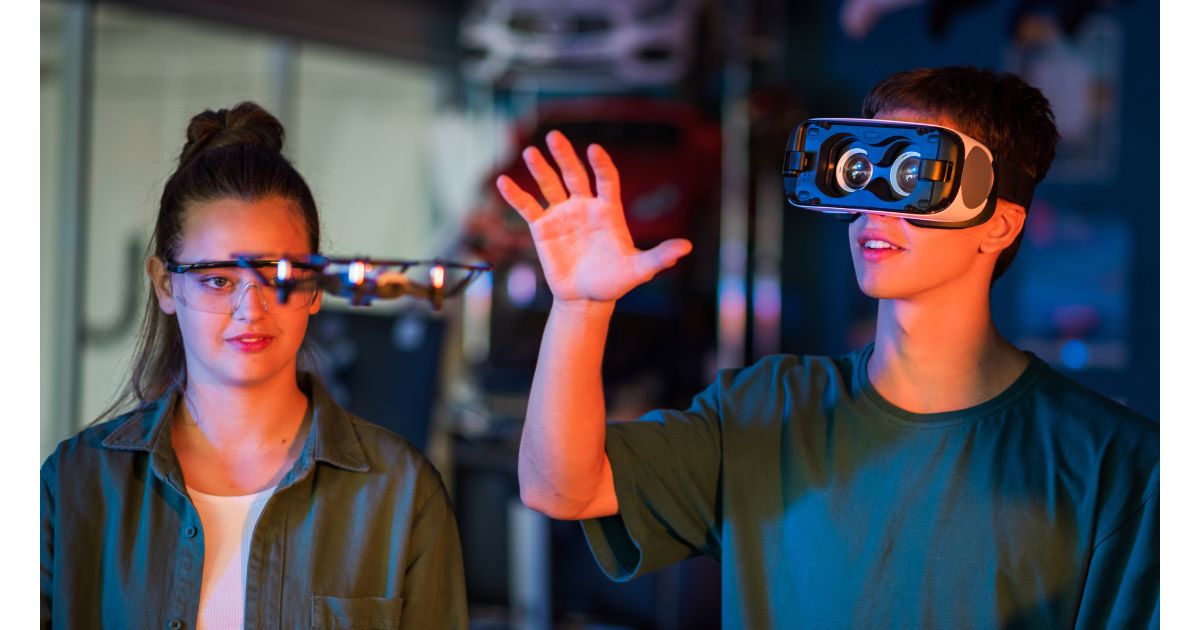
Technology in 2026 is evolving faster than ever before, reshaping industries, businesses, and everyday life. From artificial intelligence to quantum computing, the latest technology trends are not just improving systems—they are redefining how the world operates. The next tech revolution is being driven by smarter automation, deeper connectivity, and highly intelligent systems that learn and adapt.
This article explores the most important technology trends of 2026 and how they are shaping the future.
1. Artificial Intelligence Becomes Fully Integrated Into Daily Life
Artificial Intelligence (AI) is no longer a future concept—it is now a core part of modern technology ecosystems. In 2026, AI is deeply integrated into almost every digital platform, from smartphones to enterprise systems.
Companies like Google, Microsoft, and Apple are advancing AI-powered assistants that can manage schedules, generate content, analyze data, and even make decisions in real time.
AI trends in 2026 include:
- Advanced conversational AI with human-like understanding
- Predictive analytics for business decision-making
- AI-driven cybersecurity systems
- Personalized digital experiences in apps and devices
The biggest shift is that AI is moving from being a tool to becoming a digital partner in everyday tasks.
2. Rise of Hyper Automation in Industries
Hyper automation is one of the strongest drivers of the 2026 tech revolution. It combines AI, machine learning, and robotic process automation (RPA) to automate complex business workflows.
Industries such as banking, healthcare, and manufacturing are increasingly relying on automation to reduce human workload and improve accuracy.
Key benefits of hyper automation include:
- Faster business operations
- Reduced human error
- Lower operational costs
- Increased productivity and scalability
In 2026, businesses that fail to adopt automation risk falling behind competitors who operate at much higher efficiency.
3. Expansion of 5G and Early 6G Development
While 5G networks are now widely used, 2026 marks the beginning of early 6G research and testing in several countries. Ultra-fast connectivity is enabling real-time communication between billions of devices.
With faster internet speeds and lower latency, industries are experiencing major improvements in:
- Smart cities and infrastructure
- Autonomous vehicles
- Remote healthcare services
- Cloud-based gaming and entertainment
This level of connectivity is also fueling the growth of the Internet of Things (IoT), where everyday objects are connected and intelligent.
4. Quantum Computing Starts Real-World Applications
Quantum computing is moving beyond theory and entering practical use cases in 2026. Although still in early stages, it is already being used in specialized industries such as finance, pharmaceuticals, and cybersecurity.
Quantum systems can solve complex problems that traditional computers cannot handle efficiently.
Key areas of impact include:
- Drug discovery and medical research
- Financial risk modeling
- Advanced encryption systems
- Climate and weather simulations
As research continues, quantum computing is expected to revolutionize problem-solving at a global scale.
5. Growth of Extended Reality (XR)
Extended Reality (XR), which includes Virtual Reality (VR), Augmented Reality (AR), and Mixed Reality (MR), is transforming how people interact with digital environments.
In 2026, XR is widely used in:
- Education and virtual classrooms
- Remote work collaboration
- Gaming and entertainment
- Virtual shopping experiences
Instead of just viewing digital content, users can now interact with it in immersive environments. This trend is especially important for training, simulation, and remote communication.
6. Smarter Cybersecurity Systems
As technology advances, cyber threats are also becoming more sophisticated. In response, cybersecurity systems in 2026 are heavily powered by AI and machine learning.
Modern cybersecurity solutions can:
- Detect threats in real time
- Predict potential attacks before they happen
- Automatically respond to security breaches
- Protect personal and corporate data more effectively
With increasing digital dependence, cybersecurity is now a top priority for governments and organizations worldwide.
7. Sustainable and Green Technology Innovations
Sustainability is a major focus of technological development in 2026. Companies are investing in eco-friendly solutions to reduce environmental impact and promote energy efficiency.
Key green technology trends include:
- Renewable energy systems powered by AI optimization
- Energy-efficient data centers
- Electric and autonomous transportation
- Smart grids for better energy distribution
Tech innovation is now closely linked with environmental responsibility, ensuring that progress does not come at the cost of the planet.
8. Edge Computing for Faster Data Processing
Edge computing is becoming essential in 2026 as the demand for real-time data processing increases. Instead of relying solely on cloud servers, data is processed closer to where it is generated.
This results in:
- Lower latency
- Faster decision-making
- Improved performance in smart devices
- Better support for IoT systems
Edge computing is especially important for industries like healthcare, autonomous driving, and industrial automation.
9. Human-AI Collaboration in the Workplace
One of the biggest shifts in 2026 is not replacement of humans by AI, but collaboration between humans and machines. AI systems assist professionals in decision-making, creativity, and analysis.
For example:
- Designers use AI tools for faster creative workflows
- Doctors use AI for diagnosis support
- Engineers use AI for predictive modeling
- Marketers use AI for customer insights
This collaboration increases productivity while allowing humans to focus on more complex and creative tasks.
10. Evolution of Smart Devices and Wearable Tech
Smart devices are becoming more intelligent, compact, and integrated into daily life. Wearable technology in 2026 is not just about fitness tracking—it is about complete health monitoring and real-time communication.
Modern wearables can:
- Track health conditions continuously
- Detect early signs of illness
- Sync with smart home systems
- Provide AI-powered personal insights
These advancements are making technology more personal and accessible than ever before.
Conclusion
The latest technology trends of 2026 are driving a powerful global transformation. From AI integration and quantum computing to hyper automation and green innovation, every sector is being reshaped by intelligent systems and digital connectivity.
The future is not just about faster technology—it is about smarter, more efficient, and more sustainable innovation. As these trends continue to evolve, they will define the next major tech revolution and reshape how humans live, work, and interact with the world.